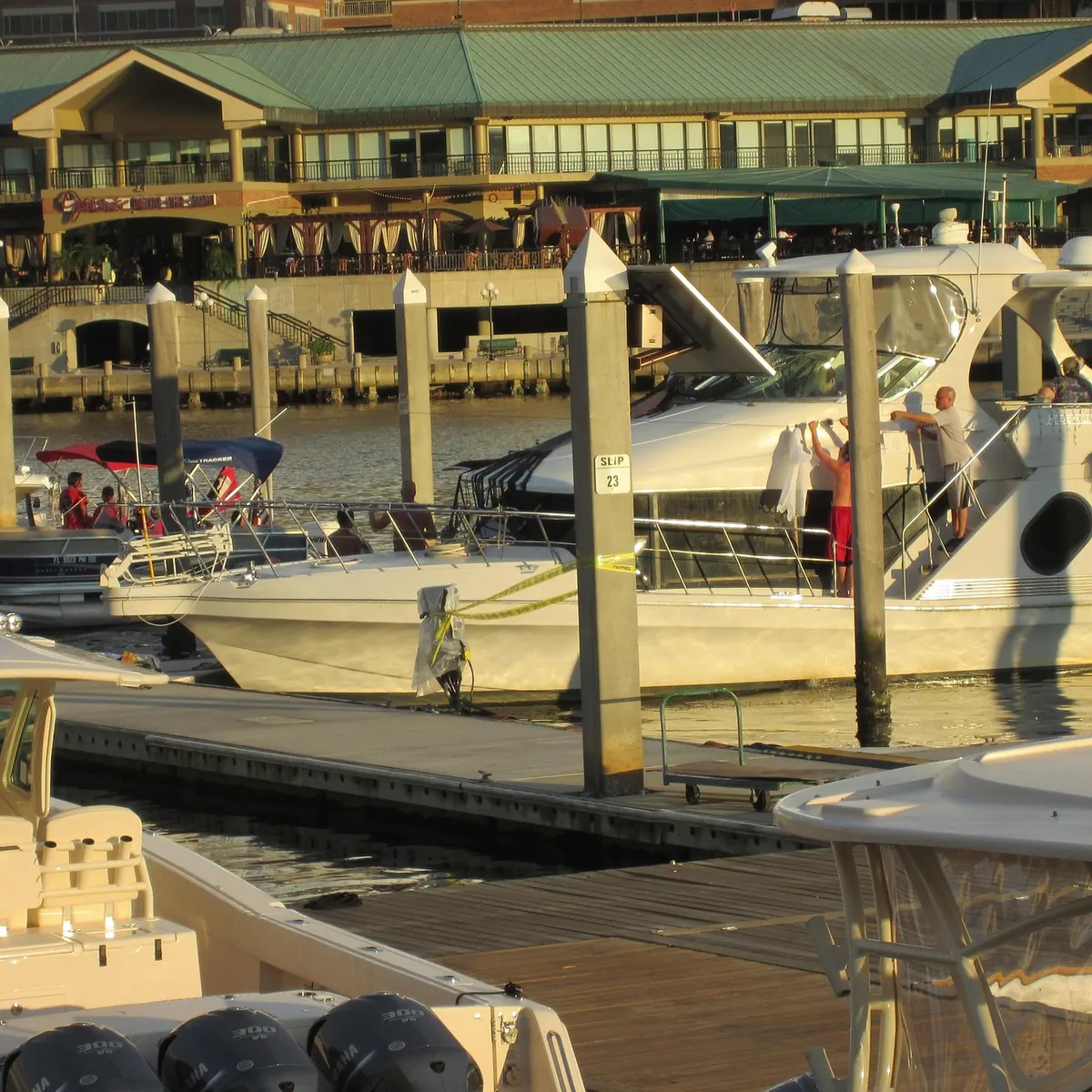
A slip looks like the simplest thing on the waterfront: a rectangle of water between a few pilings. Then you back a 32-foot boat into a 30-foot berth and discover that the anchor roller, the swim platform, and the dinghy on davits all have their own opinion about where the boat ends. Sizing a slip is a measuring job, and a tape measure costs far less than a fiberglass repair.
Length and beam get the attention, but they are only the first two numbers that matter. Draft decides whether you float at low tide. The type of dock decides whether you can step off with two bags of groceries. The contract decides how much freedom you have to sublet, live aboard, or leave a season early.
Measure Your Boat the Way a Marina Will
Marinas list dimensions from their own paperwork, and that paperwork rarely accounts for the outboard bracket or the anchor pulpit. Measure once, write the numbers down, and carry them in your phone. You will be asked for them at every dock office.
- Overall length. Bow roller or pulpit to the aft edge of the swim platform. Add the outboard or sterndrive if it sits outside the transom, and add anything on davits.
- Maximum beam. The widest fixed point, which is often the rub rail, a fender holder, or a trim tab, not the hull itself.
- Draft, loaded. Fuel and water aboard, dinghy and gear stowed, people on the boat.
- Air draft. Required if you are looking at covered berths or a shed with a door height.
- Weight. Asked for by yards that lift boats in or out on a travel lift.
Two numbers here trip people up. First, beam is usually measured at the widest point, so a boat advertised at 10 feet 6 inches may present 11 feet 2 inches at the fender line. Second, "LOA" on a registration is sometimes shorter than the boat, which is why a slip advertised as fitting 34 feet may not accept yours. Measure your own boat and trust those figures.
Length and Beam: Fit Is a Range, Not a Number
A slip is defined by several measurements, and the smallest one governs. There is the distance between pilings or between fingers, the length of the finger pier, and the width of the fairway you have to maneuver in. Ask for all of them.
For beam, a couple of inches of clearance per side is tight but workable with proper fenders and lines. More than a foot or so of slack on each side and the boat will wander, slap, and chafe against its lines in any chop; you will want spring lines, snubbers, and a plan for reaching the dock. Somewhere in between is comfortable.
Finger pier length matters more than most people expect. A finger that ends near your cockpit makes boarding easy. A finger that stops at midship means stepping down, leaning, or boarding from the bow, which gets old in the rain. Walk the slip before you commit and picture yourself carrying a cooler across the dock at night.
Fairway width is the quiet deal-breaker. A narrow fairway is fine if you have a thruster and a calm day. Add a crosswind and a strong current and it becomes a weekly negotiation.
Draft, Depth, and What Sits Under the Keel
Published depths usually describe the channel, not your assigned berth, and they are often measured at a chart datum rather than at the bottom of the tide. Ask the dock office two direct questions: what is the depth at my slip at mean low water, and when was the basin last dredged?
Then add your own margin. Silt collects in corners and along the outer edges of a basin. Boats that draw six feet may sit fine on a spring high tide and touch bottom in October. If you draw more than five feet, or if the basin is known for shoaling, a recent sounding is worth asking for. Local knowledge from a neighboring slip holder is often better than any chart.
Fixed docks change the calculation. In a large tidal range, a fixed dock means long lines and a fender board; a floating dock rises with you and keeps boarding simple.
Slip Type and Position Change the Experience
Beyond size, the shape of the berth shapes your weekends. A single finger means you tie to one side and to pilings; a double finger gives you both sides and is easier for a beamy boat. An end tie is roomy but exposed. A covered berth protects gelcoat and teak from sun but restricts air draft and sometimes limits how you approach.
Think about exposure, too. Which direction does the prevailing wind come from? Will you be backing into weather every Friday evening? Is the slip near the fuel dock, the pump-out, or a liveaboard running a generator? Is it close to the parking lot, or a long walk with a dock cart? Spend twenty minutes on the dock at a busy time and you will learn more than any brochure tells you.
Amenities Worth Paying For
Power is where boats and slips most often disagree. Check the amperage at the pedestal against what you actually run, especially if you have air conditioning, a water heater, or an electric galley. Two 30-amp receptacles and one 50-amp are different worlds. Look at the condition of the pedestals and whether electricity is metered separately.
Then weigh the rest against how you use the boat: fresh water at the dock, pump-out service, Wi-Fi that reaches your berth, restrooms and showers, laundry, security gates, dinghy storage, fuel dock hours, on-site repair and haul-out capacity, and winter storage. Liveaboard status is a separate question and not every marina permits it.
Read the Contract Before the Boat Moves In
The slip agreement is where a good summer turns into a frustrating one. Read it fully, ask questions in writing, and for anything long-term or unusual, have a lawyer look it over before you sign.
Pay attention to the length of the term and whether it renews automatically, how much notice you must give to leave, how and when rates can increase, and what the deposit covers. Check the rules on subletting, guests, and liveaboards. Confirm the insurance requirements, including whether the marina must be named as an additional insured, and read the sections on storm preparation, haul-out obligations, and who is responsible for damage to docks or neighboring boats.
Ask, too, about the small things that cause daily friction: fender and dock box rules, whether you can wash the boat at the slip, where you park, and how transient traffic is assigned when the marina is full.
Before You Sign, Spend an Hour at the Dock
- Visit at low tide and again on a windy afternoon.
- Bring a tape measure and check the narrowest point yourself.
- Walk the route from car to boat with the gear you normally carry.
- Talk to two people in nearby slips and ask what they would change.
- Ask where your boat will be moved, if at all, during a storm.
A slip that fits your beam but not your habits will cost you every weekend. Take the measurements seriously, spend time on the dock, and read the paperwork. The right berth is the one you stop thinking about.
Photo: Jharris / Pixabay