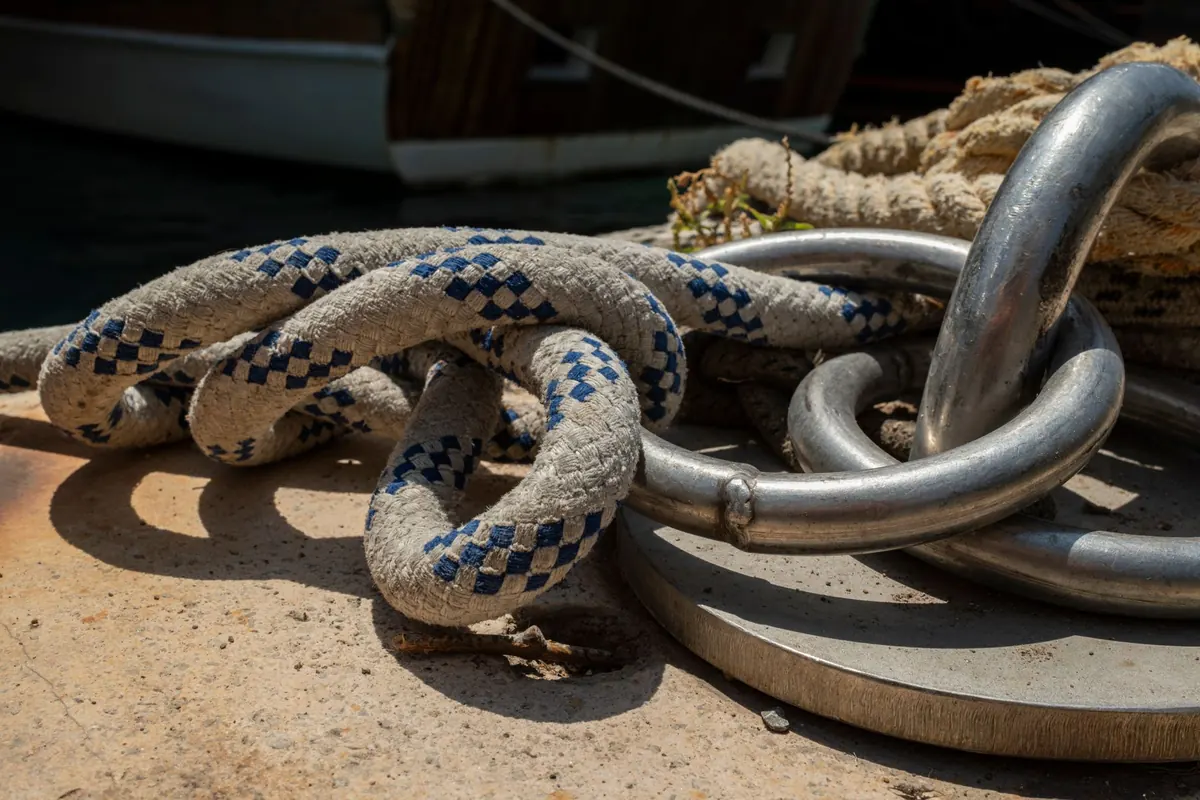
Watch a boat tie up badly and you can usually spot it from the dock: fenders swinging in the breeze, one line leading straight ashore, a skipper leaning over the rail trying to remember where the tide stood two hours ago. Watch a boat tie up well and almost nothing seems to happen. Lines go out at a walk, the hull settles against the fenders, and everyone wanders off for coffee.
The difference is rarely years of experience. It is a short list of habits, most of which are cheaper to learn here than on your own gelcoat.
Arriving Without a Plan
The most common wharf mistake happens before the boat touches anything: the approach is rushed. Wind and current push a hull sideways faster than most people expect, and a last-second burst of throttle rarely fixes what a slow, deliberate approach would have avoided. Come in slower than feels necessary, and aim to arrive at the wharf with just enough way to steer.
Two minutes of briefing pays for itself. Decide who takes the bow line, who takes the stern spring, and who manages fenders. Fenders go out on the side that will touch, set at the right height, not left dangling from the rail. Lines should be coiled and led outside the lifelines, ready to pass to someone ashore or drop over a bollard with a boat hook.
If the approach goes wrong, back off and reset. Circling out and trying again looks amateur to nobody. A cracked rub rail and a repair bill look worse.
Two Lines and No Springs
A bow line and a stern line hold a boat against the wharf, but they do almost nothing to stop it sliding along the face of it. That fore-and-aft creep is what chews through fenders, scuffs topsides, and makes a boat slap all night in a passing wake. Spring lines are the fix.
- Bow line: leads forward from the bow, angled away from the hull.
- Stern line: leads aft from the stern, same idea in reverse.
- Bow spring: runs from the bow aft to a dock cleat or bollard.
- Stern spring: runs from the stern forward to a dock fitting.
- Breast lines: short and roughly perpendicular, useful in calm water but no substitute for springs.
On a small boat, four lines — two springs and one at each end — usually hold well. Larger boats and exposed wharfs often want six. What matters is that at least two lines pull in opposite directions along the length of the boat.
Fenders That Wander or Pop Out
The point of contact between hull and wharf moves. It moves with the tide, with the load, with the wash of a passing ferry, and with how you tied the lines. A fender hung at eye level for a high concrete wall will be useless against a low timber float at the next berth.
Hang fenders low enough to sit between the hull and the wharf through the whole tidal range you expect, and adjust them from on deck with a rolling hitch or a clove hitch you can actually undo. Against rough pilings or a wall with bolts and edges, a fender board spreads the load and survives far better than a bare fender.
Fenders protect the hull from contact. They are not structural. If your lines are so tight that the fenders are squeezed flat and the boat is hanging off them, the problem is the mooring, not the fenders.
Forgetting the Tide, Then Forgetting It Again
A floating dock rises and falls with the boat, so line length is forgiving. A fixed wharf is not. Tie up short at low water on a big-range coast and the rising tide will load every line, sometimes pulling a small boat down against the wall. Tie up long at high water and the falling tide leaves the boat loose enough to wander and slam.
The answer is not one magic setting. It is allowance. Leave enough slack that the lines can absorb the full range, but not so much that the boat can build speed before a line comes tight. On a fixed wharf with a serious range, long leads and a couple of decent snubbers do more good than extra turns on a cleat.
A quiet mooring is the goal. If you can hear the lines working all night, one of them is already doing too much.
Check the lines at both extremes of the tide, not just when you tie up. If the harbour dries out or has a sill, ask the harbourmaster what the rules are before you commit — local knowledge about surge and berthing windows is worth more than any general rule.
Rough Handling on Cleats and Fairleads
How a line is made fast matters as much as where it leads. Take a full turn around the cleat first, then figure-eight turns over the horns, then a final locking turn. Done properly, the line can be eased under load without being let go completely, which is exactly what you want when the boat is surging.
Watch the wear points. Lines grind against fairleads, chocks, sharp dock edges, and the top of a rough piling. Chafe gear is inexpensive and takes seconds to fit. Keep fingers, hands, and feet clear of cleats, winches, and any line under tension, and never stand inside a loop of rope or put a turn of line around a hand or wrist to take the load.
Also match the line to the job. Nylon is popular for mooring because it stretches and absorbs shock, but stretch is a nuisance if the line is undersized or worn. Untangle, inspect, and replace anything that has gone stiff, fuzzy, or flat.
Leaving Gear to Rot, and Walking Away Too Soon
Mooring lines live in sunlight and salt. They fail slowly, then suddenly, usually at the worst moment. Keep a spare line aboard, check shackles and snubbers each season, and retire anything with a deep nick or a chafed cover. Rope is one of the cheapest pieces of safety gear on a boat.
Then give the mooring a second look before you leave. Passing wakes and an afternoon sea breeze can change how everything sits within half an hour. Walk the lines once more, check fenders are still in contact, and make sure a shore power cable has slack for the tide rather than a straight pull on a plug.
If someone else's boat or the wharf itself gets damaged, report it to the harbourmaster or marina office promptly and talk to your insurer. For anything involving liability or a claim, get proper advice from a maritime professional rather than relying on dockside opinion.
Before You Step Off the Wharf
Take sixty seconds and run a simple check: springs set and pulling in opposite directions, lines made fast with proper turns, chafe gear on every contact point, fenders positioned for the full tide range, gear stowed, and the boat sitting quietly. Tell the marina office you have arrived, pay the fee, and note where the fire extinguishers and life rings are on the dock.
Do that and you can leave the boat without a second glance. The lines will hold, the fenders will do their job, and tomorrow morning nothing will have changed except the water level.
Photo: Engin Akyurt / Pexels